Monday, November 16, 2009

Freedom Fighters / Terrorists want to look cool too! (1)


Tuesday, August 11, 2009

'Indians' Down Under

'Indian' students in Australia have attracted a lot of attention lately. There has been racist violence --- see this Economist artcle --- as well as fairly dodgy practices in Australia's education exports industry --- see here. Ironically, much of the violence has been perpetrated not by 'Anglos', but by youths of other ethnic groups. And the students are often ripped off by members of their own communities.

Education is a major service export for Australia, and these scandals pose a major risk to the sector. That's why the country's Prime Minister made formal statements in the parliament promising an end to the attacks, sent a high level delegation to India, and received the Indian Foreign Minister earlier this month with much pomp and ceremony.

Of course, attackers don't ask the victims for their passports --- they don't discriminate on which side of the Radcliffe Line their victims comes from: all Desis are 'fair targets'.

The number of young Bangladeshis in Sydney and Melbourne run well into five figures, and they too have faced similar troubles. It's however difficult to imagine the Australian government reacting that strongly if the attacks were solely against Bangladeshi students.

I guess it's about time India's neighbours benefitted from its hegemony.

Meanwhile, when Lateline, a major Australian current affairs talk show, ran a story on this, they got two people who do not subscribe to any form of the 'Indian' identity.

Saturday, July 25, 2009

Dark Side of the Moon

Earlier this week, Moonlanding anniversary was everywhere. Now, I was born many years after the event that made Ray Bradbury suggest be the beginning of a new global calendar. So I have nothing to say when old people talk about ‘oh I remember….’ But I do remember 1 April 2003, when I first watched the Dark Side of the Moon — not the Pink Floyd album, but the French mockumentary.

Titled Operation Lune in French, the premise is that Moonlanding was a hoax, and what the world saw on 23 Jul 1969 was shot in the set of the Stanley Kubrick’s 1968 classic 2001: A Space Odyssey, and for this, Uncle Sam gave Kubrick some fancy camera, but when CIA operatives associated with the project started dying mysteriously in places like South America, Kubrick got spooked, and that’s why he only made two movies in his last two decades, and all the big guns in Nixon-Ford administration, Kissinger, Alex Haig, Rumsfeld, they were all in on it.

On that evening, I got home from work and switched on the TV. Muhammad Saeed al-Sahaf was telling us that the foreign invaders were drowing in their own blood. I flicked it to CNN — but how would I know if they were telling the truth? I flicked the channel again. Something was in French. Ah, the French would tell us the truth, I thought (I was young, and naive). What was this, I wondered! Kissinger and Rumsfeld admitting to deception? Whoa! This is cooler than the other side of the pillow!

I highly recommend it.

I also remember the last time I watched 2001 in a theatre. It was the Summer of 2001. We went to a midnight screening. During the scene where the hominid tribes scream at each other over the water hole, my friend yelled out — Jews and Palestinians. Everybody had a good laugh. I highly recommend that movie too. If you find it hard to follow the birth of the star child, a kolki full of mari jane will help. If that proves too hard, penadol with red bull can give you a solid bender.

Friday, May 08, 2009

On the White Tiger

I finished Aravind Adiga’s The White Tiger in two nights. Let me begin with some quick observations.

  • The prose is very simple and crisp. There is no Rushdiesque long sentences. But it is still quite evocative.
  • Adiga describes poverty very accurately, but without sentimentalism or development porn. I was reminded of Satyajit Ray’s movies.
  • However, unlike Ray’s rural movies — and very much like his urban movies — Adiga has a strong, albeit subtle, subversive tone. I like subversion.
  • I am never going to be able to look at a driver the same way again.

Recommendation: yes.

Saturday, April 25, 2009

She didn't see

The valleys of northwest are ruled by madmen who care more about the length of one's beard than anything else. In the delta of the east, paramilitary revolts and kills the commander and wife. In the vast democratic experiment in the middle doesn't exist in the huge swatch of territory ruled by Naxalites.

Meanwhile, a singer passes away. A singer who wanted to see the promised day:

Jab zulm-o-sitam ke kohe-garaan rui ki tarah ud jaayenge,
Hum mahkoomon ke pau tale, jab dharti dhar dhar dharkegi…
Sab taaj uchale jaenge
Sab takht girae jaenge…
Uthega An-al-Huq ka nara jo mai bhi hoon aur tum bhi ho…

Radicals of left and right are trying to realise their utopian vision in Desh. History warns us against grand experiments, but the status quo is not sustainable either.

Iqbal Bano didn't see the promised day. Is it too late for us too?


video

Tuesday, March 31, 2009

Out of Pakistan

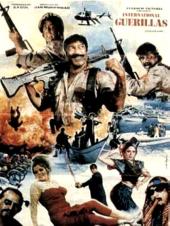
I'd really like to watch these Pakistani classics.

poster International Gorillay. A criminal mastermind sets out to destroy Islam by luring Pakistanis into gambling, dancing, and all manner of sundry sins. He tortures his prisoners by reading to them aloud from his blasphemous novel. The brave mujahedin out to stop him are disguised in Batsuits; and in the end, a quartet of levitating Qurans shoot laser beams into the nefarious villain's head, causing him to explode. Oh, the villain is named Salman Rushdie.

Zinda Laash. A black and white thriller from 1967, sort of Dr Jekyll and Mr Dracula. The first and only Pakistani film to earn the label "For Adults Only," after the board of censors accused the film of being "corruptive and evil."

Aurat Raj. A group of women discover a bomb that switches gender roles and seize power by setting it off. In this brave new world, women wield machine guns and flick their cigarettes with an easy flair, while men twirl in slow motion and swing their hips coquettishly.

Zibahkhana. Five teenagers set out to watch a concert, but find their van break down and get set upon by flesh eating zombies, a ghoulish hitchhiker, and a blood-soaked, burqa-wearing killer. The writer-director's next project is apparently a genre-busting women-in-prison meets porn-factory meets monster-spectacular named Jhabarjhilla.

----

More here.

----
Akbar isn't impressed.

Sick piece of movie. About zombies wearing salwar kameez and a senseless plot with amateur acting. The acting/story line is so bad- its hilarious. Not even worth blogging.

Monday, February 23, 2009

How often does the best picture win?

So the Academy Awards, Oscar, is done. Slumdog Millionaire won. But was that the best movie of the year? How often does the year's best picture actually win the Oscar? Put differently, how does posteriority treat an Oscar winner? And what's the metric of 'best' anyway?

These questions come up every year. You see, Oscar, like the Nobel for subjects other than natural sciences, or the Man Booker or Pultizer, involves a lot of politicking and lobbying and broader socio-cultural trends. With the 'emergence of India' being a favourite talking point of the global cognoscenti, it may not be all that surprising that Slumdog won, just as it may not have been surprising to see Arvind Adiga's White Tiger win last year's Booker. More about the book some other time, but was Slumdog the best movie of 2008? Let's be more specific, was it the best movie available to the general filmgoing public in the Anglophone world in 2008?

We can use the IMDB's ratings (details at the bottom of this page) to answer this question. Registered voters in IMDB are movie buffs whose ratings probably reflects artistic appreciation better than box office takings would, while the large number and anonymous nature of the membership would mean these ratings are free of the politiciking that afflicts Oscars. According to the IMDB regulars, 2008's best movie was The Dark Knight (6th in top 250, with 8.9 score from over 347,000 users). Slumdog Millionaire is 34th in top 250 (8.6 score from 67,700 users). Personally, I think the Batman sequel is one of the best movies of all time, and not just for the politics, but this didn't even get nominated for Oscar.

So, how often does the IMDB best picture win? Not that often it turns out. 80 Oscars have been handed out so far, and only 17 of them are considered best pictures of the year according to the IMDB. That is, the Academy has got it right only 21.25% times! Quite miserable, really.

However, they are getting better. In 3 of the past 5 years the best picture won the Oscar. Only time when the Academy performed better was between 1970 and 1978, when they got it right 6 out of 9 years. The whole list is attached as an image. A few trivia.


  • The IMDB number 1, The Shawshank Redemption, lost to Forrest Gump (44) in 1994. Two of IMDB top 10 --- Il buono, il brutto, il cattivo and The Dark Knight --- didn't even get nominated.


  • On the flipside, three Oscar-winning blockbusters --- Gone with the wind, Ben-Hur and Titanic --- weren't the best movie of the year. In fact, Titanic, the biggest grossing movie of all time, isn't even in IMDB top 250!


  • If it wins, Slumdog Millionaire will be the 2nd South Asia related movie to take an Oscar, the first being Gandhi (165) of 1982. The best movie of that year was Blade Runner (109). There is no other South Asia related movie in the IMDB top 250.


Saturday, February 21, 2009

Lazy Days


IMG_3786


Thursday, December 18, 2008

Mrs Inspector Amar Nath

When Yossarian, who had not been heard from for years, learnt that yours truly was getting married, he wrote in to offer congratulations. "I presume an arranged marriage with a Sikh girl, are you getting a dowry?" he asked in his usual charming manner.

Yossarian always had a certain world view, one in which Bengalis solely ate fish, where a girl who smiled at you wanted your affections, where the Inspector Amar Naths of the world got arranged marriages with Sikh girls and rediscovered their religion. And in which Punjab's only culture of course was agriculture.

Anyhow, who am I to argue about the validity of one man's veltenschaung over another's? Thus I wrote back:

Thank you Yossarian, yes an arranged marriage, with a good Gursikh family - farmers. They are from a village near Bhatinda, and as she is an only daughter, I am going to get 10 acres of land and 51 cows in my dowry. Don't get me wrong, they are not unsophisticated villagers, they are quite prosperous - it's just they are into agriculture. Also they are naming a tractor after me. A bit religious too. I had to promise on our holy book I would never smoke again, so Akbar old mate, no more Sheesha for you and me. You would be suprised how much alcohol people from villages drink. One grandfather is a priest at the village gurudwara, so lot of pressure on me to become more religious. The other grandfather was an Army colonel, with a very Anglo-Jat moustache pointing upwards and all.

Fought in 1971 war by the way Anthony - he was really excited that I too was going to Dhaka! Apparently he was the legendary Shahbeg Singh's underling - when they were training the Mukti Bahini. He cut his beard and moustache and put on a lungi and stank of fish as part of his disguise. This was all told to me over a Scotch whisky.
Actually, the whole village has a very interesting history. Bhatinda is in the south of our Punjab, a region known as the Malwa. The more fertile and better irrigated fields are North and West (especially in what is now Pakistani Punjab). So 60 years ago, this area was barren and largely uninhabited. When Hindu and Sikh refugees came across at the time of partition, there was not enough (and similar quality) land to give them to compensate for what they had left behind, so many of the refugees had to make do with land in Malwa. This includes my wife's family.
One thing the administrators tried to do was ensure communities were settled together where possible. So this village consists entirely of Sikh and Hindu refugees who came over together from their home in Pakistan. In fact, they have named their new village after their old home in Pakistan - the village's name is Naya Toba Tek Singh.

Sunday, December 07, 2008

The Indian awful conspiracy: Part II

The Nation likes to describe itself as "the most credible of English newspapers in Pakistan". Among their credible and brilliant insights is one by columnist Humayun Gauhar that "the militants were neither Pakistani nor Muslim but Hindu and Israeli".

http://www.nation.com.pk/pakistan-news-newspaper-daily-english-online/Opinions/Columns/07-Dec-2008/Lesson-one-cover-up

This view, credible and brilliant as it may be, is not unique in Pakistani media. Earlier in the week, Frontier Post had an article with the headline:

Mumbai terror attacks :
Further evidence of the Anglo-American-Mossad-RSS nexus


http://frontierpost.com.pk/News.aspx?ncat=ar&nid=621 . If the link does not work, try getting to it from here: http://frontierpost.com.pk/Default.aspx?ad=04-12-2008

the Indian awful conspiracy


Pakistan foils Indian conspiracy
http://www.thenews.com.pk/updates.asp?id=61906
  Updated at: 0740 PST, Sunday, December 07, 2008  
  ISLAMABAD: Pakistan Intelligence agencies once again made unsuccessful, the Indian awful conspiracy against state of Pakistan.

According to details Pakistan intelligence got confirmed report about Indian conspiracy that Indian navy had planned to kidnap Pakistan cargo ship carrying cement for Sri Lanka.

Intelligence sources said that Indian Navy had hatched a conspiracy to place arms on Pakistani cargo ship to put blame of smuggling of arms and ammunition on Pakistan government but Pakistani intelligence agency stopped that cargo ship at Karachi port.

Monday, December 01, 2008

Pakistani Ambassador admits that LeT received training and support from ISI, and then lies about LeT continuing to operate in Pakistan


Or so I claim. Shoot me down, here's my semantic argument:
 
CNN's "Late Edition"
 
BLITZER: A lot of intelligence, counter terrorism experts are pointing a finger at this group, Lashkar-e-Taiba. And I'm going to read to you from "The New York Times" today because I want you to respond. "Lashkar-e-Taiba, which has a track record of attacks against India has received training and support from Pakistan's premier intelligence agency, Inter-Services Intelligence, or ISI, according to widespread intelligence reports." That was in today's "New York Times."
 
Read: LeT has received training and support from ISI
 
HAQQANI: Lashkar-e-Taiba is a group that has been banned in Pakistan. Of course, all such groups, al Qaeda is a banned group but that doesn't stop al Qaeda from operating. The important thing is that the government of Pakistan will make sure that any group or individual that is found to be involved in this or any other act of terrorism is subjected to the same process that these groups have to be subjected to under international law. Let me just say one thing.
 
Read: Haqqani implicitly admits the accusation is correct (by not denying it outright). He has to, he has himself written in the past that ISI supports LeT. All he says is that LeT is banned, which is not the question he was asked.

BLITZER: Was this group, though, created by Pakistani intelligence?

HAQQANI: Well, there's no way for me to know who created it. But we do know that it existed in Pakistan and operated in Pakistan until it was banned.
 
Read: Haqqani seems to suggest LeT stopped operating in Pakistan after it was "banned". This is incorrect. LeT was banned in Pakistan in 2002. Writing in 2005, Haqqani himself said "Pakistani authorities have been reluctant to move against either Lashkar, which continues to operate in Kashmir, or Jamaat-ul-Dawa, which operates freely in Pakistan." He also says that "Saeed (LeT's founder) remains free and continues to expand membership of his organization..."
 
***

The Ideologies of South Asian Jihadi Groups

Husain Haqqani Current Trends in Islamist Ideology, April 2005
 

The most significant jihadi group of Wahhabi persuasion is Lashkar-e-

Taiba (The Army of the Pure) founded in 1989 by Hafiz Muhammad Saeed.

Backed by Saudi money and protected by Pakistani intelligence services,

Lashkar-e-Taiba became the military wing of Markaz al-Dawa wal-Irshad

(Center for the Call to Righteousness).

After

the U.S. froze Lashkar-e-Taiba's assets and called for it to be banned, Saeed

changed his organization's name in Pakistan to Jamaat-ul-Dawa (the Society

for Preaching). Pakistani authorities have been reluctant to move against

either Lashkar, which continues to operate in Kashmir, or Jamaat-ul-Dawa,

which operates freely in Pakistan. Lashkar-e-Taiba and Jamaat-ul-Dawa

scaled down their military operations against India to help Pakistan honor its

commitments to the U.S. and India. But Saeed remains free and continues to

expand membership of his organization despite divisions in its leadership.

Under U.S. pressure, General Musharraf placed Jamaat-ul-Dawa on a

watch list in November 2003.


Saturday, November 08, 2008

Akbar is incommunicado

In the aftermath of the US election, we received the following press statement released by the Al-Akbar movement - the one promising revolution in Pakistan or Khaleejistan.

Akbar will not be checking his e-mails indefinitely and will be disassociating with all blogs and bloggers. He will be checking the colour of Barack Obama — it’s light brown, not black — and to eliminate all witnesses to the Obama-McCain bets with Anthony. Nara-e-Akbar Akbar Akbar.

Dear reader, stay tuned for this developing story.

Wednesday, November 05, 2008

Obama Wins! Akbar Dances!


As per the terms of the bet between Anthony and Akbar, the world now waits for this historic moment: our very own Akbar on youtube, draped in the Indian flag, dancing the bhangra, and shouting Democracy Zindabad!

So you can appreciate the sweetness of this moment, you should understand that Akbar thinks it his patriotic duty to direct all his farts in India's general direction, and considers Democracy to be American Imperialism not suited for the genuis of the Pakistani people. We are not sure about his Bhangra skills either.

Thursday, October 30, 2008

If I ever have grandchildren...

...I hope they will be bastards.

No man or woman should be forced to bow to false Gods, or fill in forms in triplicate for bastard bureaucrats. And there is no other way.

A pox on all marriages!

I hereby certify that whoever thought this is not an insane way to register a marriage is an idiot and a lunatic. I also certify that I am not an idiot and a lunatic, as required by the forms referred to in point 1.

Q1. What is the procedure for Solemnization of marriage / Registration of marriage?
i. Procedure for Registration under HMA.
ii. Procedure for Registration under SMA.
iii. Procedure for Solemnization of marriage under SMA.

Q. Where do I have to go and during which hours?
To the office of Additional Divisional Magistrate in whose jurisdiction any of the husband or wife resides, during 9.30 a.m. to 1.00 p.m. on any working day. The office is located in the DC office complex on main Mehrauli Badarpur Road and near Anupam Appt. for assistance of public, reception counter is manned during the official hours for proper guidance. Necessary forms can also be obtained from Reception Counter or can be downloaded from this site.

Q. Which papers/documents/fees, do I have to take with me?
1. Hindu /Special marriage Application form duly signed by both husband and wife. 2. Hindhu/Special marriage Documentary evidence of date of birth of parties (Matriculation Certificate / Passport / Birth Certificate) Minimum age of both parties is 21 years at the time of registration under the Special Marriage Act. 3.Residential proof of husband and wife . 4.In case of Special Marriage Act, documentary evidence regarding stay in Delhi of the parties for more than 30 days (ration card or report from the concerned SHO). 5. Hindu marriage Affidavit by both the parties stating place and date of marriage, date of birth, marital status at the time of marriage and nationality. 6.Two Hindu/Special marriage passport size photographs of both the parties and one marriage photograph. 7.Marriage invitation Hindu marriage card, if available. 8. Hindu marriage If marriage was solemnized in a religious place, a certificate from the priest is required who solemnized the marriage. 9.Rs. 10/- in case of Hindu Marriage Act and Rs.15/- in case of Special Marriage Act to be deposited with the cashier of District and the receipt should be attached with the application form. 10.Affirmation that the parties are not related to each other within the prohibited degree of relationship as per Hindu Marriage Act or Special Marriage Act as the case may be. For details of such relationships Click here. 11.Attested copy of divorce decree/order in case of a divorcee and death certificate of spouse in case of widow/widower. 12.In case one of the parties belong to other than Hindu, Buddhist, Jain and Sikh religions, a conversion certificate from the priest who solemnized the marriage (in case of Hindu Marriage Act). 13. In case one of the parties is a foreign national, no objection certificate/marital Status certificate from the concerned embassy.

All documents excluding receipt should be attested by a Gazetted Officer.

Friday, October 24, 2008

A-A-A bets on the US election

The brothers are all barracking for Sen Obama, but both Amar and Akbar have bet on Sen McCain against Anthony. This post records the bets.

Back in May, Anthony said: Well, Obama has won the nomination. And markets are giving him a 60% chance of beating McCain. I'm happy to give anyone a 3 to 1 odd that Obama will win.

Amar accepted: Alright, I accept your offer of 3 books vs 1 book. Suggested limits on cost of books -up to 25 pounds or A$ equivalent as price of each book (ie 75 / 25 pounds maximum stakes). I fully expect to lose the bet, but the odds you offer are better than the market's.

Akbar had an alternative offer: If Obama wins, I will take you Khalil Jibran restaurant in Sydney red light area. If McCain wins, you will stop supporting democracy and become pro-dictatorship in Bangladesh (evidenced by public declaration of this in atleast one article agaisnt democracy).

Anthony's counteroffer: I can go to a Sydney restaurant whenever I want, so you've to offer something more. Here is what I suggest - if Obama is the next president, you'll drape yourself in the Indian flag, dance bhangra and shout democracy zindabad (it will have to be witnessed by someone credible, or videotaped or something). If Obama is not the next president, I'll give you an anti-democracy article.

Akbar: Man - it's cheaper for me to fly and dine you in the most expensive restaurant than to get my mother to stitch the indian flag! Let's make it more painful for u as well - in the event of McCain winning, you will drape your head and body in a Pakistani flag, and make a video speach against democracy and praise Gen Musharraf and Gen Moeen and post it in A-A-A and other political blogs and facebook. I agree to your Indian flag demand only if you agree to the above.

Anthony: Done.

Here is how the Intrade odd of an Obama presidency has evolved since May.


Friday, October 17, 2008

A-A on Italy's Deshis

Amar

I think I have been witnessing, in little visual sightings over 4 years, the rise of the Bangladeshi community in italy. In the early years, they were selling umbrellas and knick knacks on street corners, carrying everything they sold. Then I started seeing them behind the counter in semi-permanent and corner shops, and in restaurants, as waiters and chefs.

Then I saw that some of them had their own small shops, and I even found a place with Bangladeshi candidates for rival parties competing in local elections.

This year, for the first time, I saw that women had followed the men, and I saw families together - man, woman, and little children. These families were not sellling products, they were checking out things like normal family on weekend, and then to cap it all, I even saw overly ghettoised Bangladeshi teens, in expensive sneakers wandering on their own.

I feel like I have seen community evolution in high speed.

Akbar

My father just picked on any Bengali vendor whenever i was busy looking for a street on the map - one of his ways to keep himself entertained.

He would start off with - Bandhu! kaimun acchen? After the usual Bhalo and Ami-o Bhalo, there would be the usual bari kothaye and questions about Italy and waghiara waghaira, and directions - which bus to take etc.

Some would be arrogant and say their bari is Rome and dont know any other bari (bari = home), and dad would nod his head disappointingly and mutter - arrogant bastard, forgetting his roots.

Near the colloseum, dad combined an old Pakistani film dialogue into his own - Yeh woh jaga hai jahan Rome kay zaleel kuttay kharey hokar tamasha dekhtay tey. I responded - Ab Bengali kharey hotay hain!!

We bought coconut slices and fruit salad from a Bengali vendor. In the heat the taste was heavenly.

Wednesday, October 15, 2008

Govt of Khalsa

Friday, September 26, 2008

The most interesting looking chef I ever saw

This photo is from the BBC website. The blurb reads: Sweet makers prepare special pastries in Damascus, on the fourth week and final of the Muslim fasting month Ramadan. (Photo: Bassem Tellawi/A

Somehow they seem to have overlooked that the Chef is carrying an absolutely gigantic tray of sweets, has a ferocious face and scary moustache, and just in case you had any doubts about whether you enjoyed his cooking, he also carries a pistol! Has there been a more colourful chef? Damn those western cooks who swear a bit and think they are men, this cook is a real man's man who will kick their gym-going ass! He swears even more, loves to resort to violence and he doesn't take rubbish from noone! And when he gets angry, he takes his pistol out and fires in the air! Woohoo!

We need more colourful people like this in our lives.
 

Wednesday, August 20, 2008

Gens M

One gone.


video

One more to kick out.

video

Hum dekhenge.

video

Inquilaab Zindabad.

Tuesday, August 05, 2008

Jesus look-alike

This looks like Jesus, doesn't it?

Well, perhaps not entirely! Poseidon, Greek God of the Sea, and perhaps one of the inspirations for our modern image of Jesus, seen flaunting his stuff in an ancient mosaic at the Louvre Museum in Paris.

Monday, July 28, 2008

On Jodhaa Akbar

Just in case you are not familiar with the world of Hindi movies, Jodhaa Akbar is one of the most expensive movies ever made in India. Set in the 16th century, it is based on Emperor Akbar's relationship with his Rajput wife Jodhaa Bai. This is my take on the movie. Short version: it lacks direction. Long version, read on.

Let's begin with the things that I liked. I liked the language. I had to use the subtitle to understand many of the Farsi words. But I did get the feeling that this is how the elite of North India might have conversed in the Sultani era and beyond. Also, listening to the Rajput’s Sanskritised Hindi and the chaste Urdu of akbar, one appreciates just how syncretic Bollywood is. And that’s a good thing. Bollywood for a peaceful Desh!

I also liked the costumes and sets. Again, I got the feeling that this is what people in 1550s India (not just the rich, but also the men in bazaar) wore, and this is what the place might have looked like.

And at 200 minutes, the movie didn’t really sag. The set, costume and dialogue kept it going. But the core of it — the love story between the Emperor and his wife — was at most 100 minutes. So the makers of this movie had two options they wasted: they could have done more with the love story, or they could show more battles and politics.

Amar or I would have liked the second option. As it were, the movie didn't have much of politics. It didn’t show any of Akbar’s reign. And I think that was good. The historical basis of the events covered in the movie are 6 months of akbar’s 62 years of life. I’m glad that the movie didn’t explicitly say that Akbar was a great king because of his marriage to a Rajput princess.

In fact, it almost certainly got the history wrong. For one thing, the 6 feet plus Roshan is a very improbable Akbar - according to the historical record, Akbar was a rather short fellow. But the movie doesn't claim to get the history right. It is billed as ‘one narrative of what happened’ in those months.

I was rather disappointed about the battle scenes though. I wasn’t expecting Lord of the Rings, sure. But Bollywood probably has reached a stage where we can expect something like Gladiator (the battle between the Romans and Goths). And I don’t think the problem was money or technology. I think the issue was more with direction. Even the one-on-one combats were not anywhere near as awe-inspiring as they could have been.

In any case, packing in more politics and battles probably would have made it a very different movie from what they set out to make. But there is really no reason why they couldn’t have taken the first option.

I think they could have done a much better job with the love story.

Now, romances are hard to do. A love story with a happy ending is even harder — to paraphrase Tolstoy, all happy endings are alike and so on. But even then, one can think of a number of possible avenues not pursued (or not pursued enough).

For example, Jodhaa could have had feelings for someone else, but she’d come to love Akbar: she was engaged, she could have had developed feelings for his fiance — Rai’s debut movie was based on the theme of love and marriage, and that was a great love story.

And if the romance didn't have a third person, then it needed other enemies and obstacles. They could have had lot more court intrigue. Indeed, there was a bit of it, with tensions leading up to the intermission, but then it all fell through.

They could have shown a lot more verbal jousting and battles of wit. Think of Katharine Hepburn and Cary Grant in The Philadelphia Story. In fact, Bollywood and Urdu literature have a rich tradition of this. One wonders, why wasn’t more made of that heritage?

I should also note couple of other things.

I was extremely disappointed with the Khawaja song. It's meant to be a Sufi devotional number. The idea is that the song should lead to the listener transcend into some ‘deeper meaning’ and dance away in a haze (I think ganjah helps). I love the genre, whether in Urdu, Punjabi or Bangla (in Bangla they mix Radha-Krishna/Ali/Rasul/pirs/tigers the whole lot — talk about a confused syncretic bunch). This particular song was just boring though.

I liked some of the lesser characters. The guy playing the renegade Rajput prince looks like Amitabh Bachchan circa 1975. Him and the guy playing akbar’s brother-in-law were both impressive. Maham Anaga was also really cool. But the evil mullah could have been a lot more evil.

Finally, having seen Taare Zameen Par, and noting Gowarikar and Farhan Akhter's recent outputs, one must wonder how much of Lagaan and Dil Chahta Hai were Aamir Khan.

Thursday, July 24, 2008

Ramayana

This summer, the British Library in London have been hosting a fascinating exhibition on the Indian epic, the Ramayana. Not only that, they are hosting online the 17th century illuminated manuscript which forms the centre piece of the exhibition. They have done a brilliant job, and you can and should go view it here.


I have alway been interested by the Ramayana story and its characters (Sympathy for Ravan, Translating Ramayana and Other Thoughts, Sita the Bitch, Chat-up Lines of the Ancients), but am not as familiar with the story as I would like to be, so when I visited a couple of months ago, some things struck me as unexpected. At the time I scribbled them down on a brochure, and now I jot them down here to share my ignorance and thoughts with my friends. These unexpected realisations were:

1. Rama is shown with blue skin and a moustache.

Thinking about it, Krishna is blue, and Rama and Krishna are both avtars of Vishnu, so perhaps that is not so odd. There is some logic, though I have not previously seen Rama depicted as blue-skinned. Why should Vishnu be blue though? It was Shiva who was neel-kantha or blue throated, from drinking the poison of the cosmic ocean.

The moustache thing is fascinating. From casual observation, a majority of Indian men seem to have a moustache, but in the popular depictions of Hindu Gods and Epics, only the demons, the villains seem to have moustaches, while the male Gods are depicted clean-shaven and looking somewhat androgynous. Is this perhaps only a recent innovation? I was thrilled to see a more hirsute Indian hero.

2. Why does Ravana have a donkey's head as one of his 10 heads in this image? Also, why was he shown with a donkey's head only on this manuscript page (page 38), but none of the other pages?


3. Don't you love the crazy faces of the women in the photo? One has a disturbingly wide smile, one appears to be a Zombie. But even the Zombie has found a lover. Ravana's Lanka seems a haven for those who are different, a kind of Amsterdam of its day.

4. Why are there bears (yes, they do look like boars, but the commentary said bears) fighting in Rama's army? What is the story here?


5. Did you know monkeys come in two colours?

6. I was amused in a juvenile kind of way by the anatomical accuracy of the monkeys in the manuscripts. They all seemed to have visible male genitalia! If this casual observation was correct, this suggests that Rama's vanar-sena, or monkey army, was also exclusively male. This raises:

7. Why aren't there any female monkeys fighting? Are female monkeys not as good at fighting, and not even of some relative utility? Is war an exclusively male preserve across species? I don't know about the warrior capabilities of female monkeys, but it seems wasteful to leave them out fully!

8. This wasn't something I noticed, but rather I overheard. There were a group of serious sounding women discussing the Ramayana story. One said she was troubled as it began with a queen who controlled the king, and ended with a queen controlled by a king. This, she declared, made the Ramayana story quite problematic from a feminist perspective.

No comments!

Monday, June 30, 2008

A-A-A talk Fatherland

Akbar: I am reading Fatherland. In so many ways the Nazi Germany is similar to Saudi Arabia. For example Saudis require all nationals to get pre-marital medical check up, which is also mentioned in Fatherland.

Anthony: I’d have thought most totalitarian regimes have that kind of behaviour in common. Anyhow, what do you think of the story?

Akbar: It’s good. Better than the movie. But the ending was, well, hmm.. shrug.

Anthony: Yes, the ending was thoroughly disappointing.

Amar: Yeah, it's a total copout. If I remember correctly, it is that they succeed in giving the information to the Americans, who are stunned by the horror of what happened and stop becoming friends with the Germans. A better novel, more chilling and probably more believable, would have been to give the information to the Americans, then realise the Americans have known it all along, and that they don't really care — it makes sense to be friends with the Germans, and raking up past just gets in the way.

Or have I got the ending wrong?

If I have it right, I think it was probably the Publishers who made him change the ending to appeal to Americans — I can't believe such a good writer would pick such a crappy ending.

Akbar: The book leaves it ambiguous as to what happens — it implies without saying the information gets across — it doesn't deal with what happens afterwards.

It's the movie which shows the information reaching the Americans at the last moment, and stopping the American rapprochement with the Germans.

Amar: I still think the better ending would be the throwing of cold water on the fire of hope.

Tuesday, May 06, 2008

I didn't get 'Life of Pi'

First published in September 2001, Life of Pi by Canadian author Yann Martel is a novel that explores religion and spirituality. It won the prestigious Booker Prize in 2002. This alone is a good reason for reading the book, and if you haven’t, don’t read any further because it may spoil an otherwise good yarn for you.

This is not a book review as such. Rather, it shows why I didn’t get the ‘deeper meaning’ of the novel.

The novel promises a story that will make one believe in God. So, what’s the story? Well, there is this confused kid who gets shipwrecked and survives 200 something days in the Pacific Ocean. Pretty amazing stuff. The thing is, there are two versions of the story, one more fantastic and less sad than the other. There is no way to tell which is true. The only thing we know is that the ship sank and the boy survived. And so it is with God, we’re told.

I read it and went, huh?

Okay, so we — the human civilisation — are a ‘miracle’. For life to form, we need a certain kind of star, and a planet that is a certain distant from the star, with a certain kind of atmosphere and mass and structure. Then that life will have to evolve in a certain way for there to be any intelligence. And the intelligence will have to be used in a certain way for there to be any civilisation. And chances of all this happening is very low, and yet here we are.

We have two sets of stories to choose from. One story has a cosmic being / nature / supreme order / authority / God that gives this ‘miracle’ a sense of meaning and purpose. The other story says that yes it’s a low probability event, but it has happened and there is no underlying rhyme or reason for it.

The first is a more fantastic story. The second is sad because it means that our lives don’t really mean much — the whole unbearable lightness of being.

I knew all this before reading Life of Pi. So after reading the book, I thought huh, this is not making me believe in God any more than what I did (or didn’t) before. But then I thought, hmm, perhaps the idea of the book is to put doubt into the minds of believers. But that just sounds far-fetched.

Then I remembered something I read about the Holocaust survivors. The ones who were religious going in found their faith strengthened — didn’t their very survival prove God’s existence? Those who were doubters on the other hand became even more so — what kind of God allows his chosen people to get wiped out?

I guess so it is with this book — believers will believe, and the doubters will doubt.

Friday, April 25, 2008

Jis Desh Main Ganga Behti Hai

The Mumbai Indians' next home game on April 27 may not feature the much talked about cheerleaders. Though there is no official word as yet, a minister in the Maharashtra government spoke out against them. "We live in India where womanhood is worshipped. How can anything obscene like this can be allowed?," asked Siddharam Mhetre, the minister of state for home affairs.

***

The Minister then started singing Hum us desh ke vasi hai jis desh main Ganga behti hai. That's when everyone realised the Minister had been living in his own fantasy world since 1960.

Tuesday, April 01, 2008

Dates with destiny

Long years ago we made a tryst with destiny, and now the time comes when we shall redeem our pledge, not wholly or in full measure, but very substantially. At the stroke of the midnight hour, when the world sleeps, India will awake to life and freedom. A moment comes, which comes but rarely in history, when we step out from the old to the new, when an age ends, and when the soul of a nation, long suppressed, finds utterance. It is fitting that at this solemn moment we take the pledge of dedication to the service of India and her people and to the still larger cause of humanity.


Thus Pundit Nehru greets India's freedom in one of the most wellknown speeches of the 20th century.


I came across this the other day:


There is a mysterious cycle in human events. To some generations much is given. Of other generations much is expected. This generation of Americans has a rendezvous with destiny.


I know you are thinking 'cool, Obama channels Nehru'. Unfortunately, it's not Obama. It's Franklin D Roosevelt, speaking before the Democratic Convention on 27 June 1936, well over 11 years before Nehru. The above sentences appear towards the end of the speech, followed by this:


In this world of our in other lands, there are some people, who, in times past, have lived and fought for freedom, and seem to have grown too weary to carry on the fight. They have sold their heritage of freedom for the illusion of a living. They have yielded their democracy.

I believe in my heart that only our success can stir their ancient hope. They begin to know that here in America we are waging a great and successful war. It is not alone a war against want and destitution and economic demoralization. It is more than that; it is a war for the survival of democracy. We are fighting to save a great and precious form of government for ourselves and for the world.


Here is the rest of FDR's speech.

Wednesday, March 12, 2008

Incredible movie biology

Some time ago, Amar talked about the Giant Rat of Sumatra, er New Guinea. Well, islands are conducive for things like Giant Rats, and other odd-sized animals. Islands typically don’t have large carnivores — not enough food supply for their survival. So, in the absence of large carnivores, smaller carnivores and herbivores grow bigger than their mainland counterparts. And at the same time, large herbivores tend to shrink over time. That’s why islands could have Dwarf Elephants. These phenomena are called island gigantism and insular dwarfism respectively.

Could something like this have happened in Skul Island? The wiki link says that the island has an unstable ecosystem. What does that mean? Those dinosaurs have survived 65 million years in the island, how unstable could the ecosystem really be then? And how the hell did those insect grow so big?

And what about Kong himself? How did his kind get to grow so big? The wiki says it was the last of its species. How did it get to the island?

And what about the human inhabitants? I thought the scene where they came to get Ann was genuinely cool. Obviously their religion is a cult of Kong. But what is Kong meant to do with Ann? Gorillas don’t eat meat (they eat insects if occasionally). Does Kong eat meat?
I watched King Kong in the plane few weeks ago, and started wondering these. You see, one really can’t enjoy the grandeur of King Kong in the tiny screen that one gets in the economy class in a Boeing 777. This is one big screen movie.

I watched I am Legend in the big screen. I was looking forward to it eagerly. Will Smith is cool. The idea of the original novel seemed cool. A deserted New York City could have been cool. And I happened to be there when they were shooting it. How could it go wrong?

Well, it did go wrong. Neville, Smith’s character, was hunting the mutants. But the mutants were also hunting Neville. They were watching him. They laid traps for him. I’m sure New York’s concrete jungle could have been exploited for some really spine tingling cat and mouse spooky scenes. Shame nothing like that happened.

And since it wasn’t thrilling enough, I started wondering about the mutants’ biology. So the virus that was supposed cure cancer had terrible side effects — it killed most of the humanity, and resulted in rabies, hair loss, loss of resistance to the UV ray and extreme aggression among most of the survivors. Only a very small number of people were resistant to the mutated virus.

Okay, so far so good. But why the hell do all the mutants look similar? Surely CGI doesn’t have to mean that. These creatures only come out at night because of their problem with the UV ray. But does a problem with the UV ray give them night vision? Does the virus affect their optic nerves? And how did the creatures get to be so powerful? And how did they develop spiderman-like climbing abilities?

You see, if you start thinking about this stuff, the movie is obviously not going so well for you. But I’m still curious enough about the book to read it. Perhaps I’ll write about it some other time. Meanwhile, if you want more such stuff (physics, not biology), check this out.

Sunday, March 02, 2008

bow wow!


:-)